
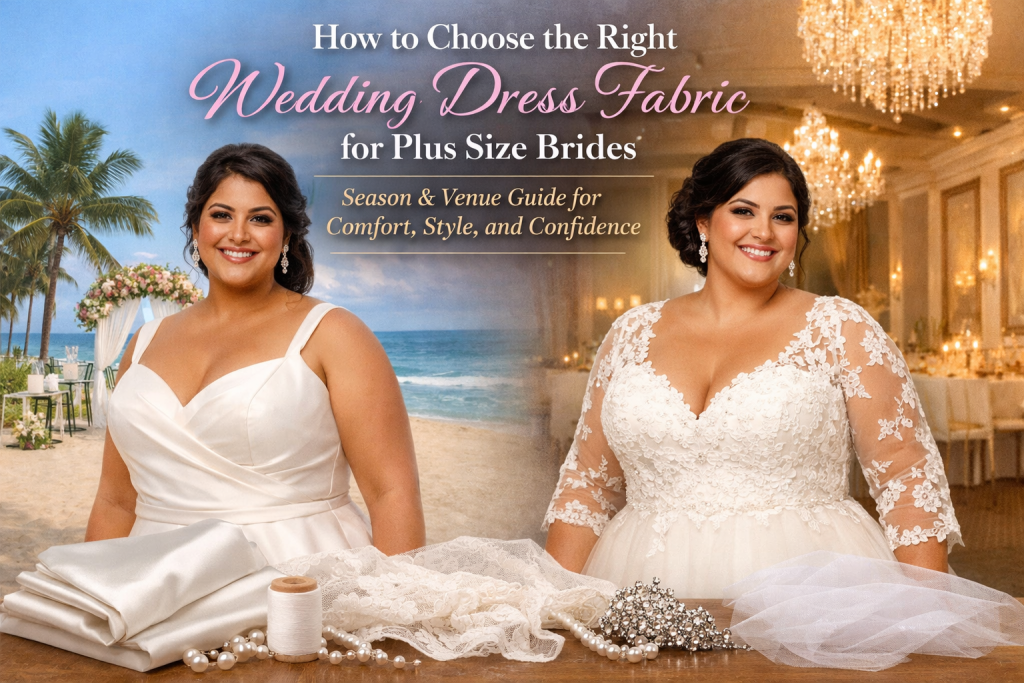
Season & Venue Guide for Comfort, Style, and Confidence
If you’re here, chances are you’re planning your wedding congratulations! Wedding planning is one of the most exciting times in your life, filled with decisions about your venue, decor, guest list, and of course, your wedding dress. While most brides focus on silhouette or style first, fabric plays an equally important role in how your dress looks, feels, and performs throughout your wedding day.
For plus size brides especially, wedding dress fabric can affect comfort, structure, breathability, and overall confidence. The right fabric can enhance your shape beautifully, while the wrong fabric can feel heavy, restrictive, or uncomfortable after hours of wear. This guide will help you understand how to choose the best wedding dress fabric based on your body comfort, wedding season, and venue style.
Why Wedding Dress Fabric Matters for Plus Size Brides
Wedding dress fabric impacts much more than appearance. Fabric affects how your dress supports your body, how it moves, and how comfortable you feel from ceremony to reception.
Structured fabrics can help provide shaping and support, while softer fabrics can create movement and flow. Breathability is also important, especially for outdoor or summer weddings. Some fabrics hold structure well for long events, while others are lighter and easier to wear for extended periods.
For plus size brides, fabric weight and stretch also matter. A well-structured fabric can help smooth and support, while flexible fabrics allow comfortable movement during walking, sitting, and dancing.
Best Wedding Dress Fabrics for Plus Size Brides
Satin Wedding Dresses
Satin is one of the most popular bridal fabrics because it provides structure and a smooth, polished finish. Satin wedding dresses often create a clean silhouette and photograph beautifully. Heavier satin provides strong structure, while lighter satin blends offer more movement and flexibility.
Satin works well for formal weddings, traditional venues, and indoor ceremonies.
Lace Wedding Dresses
Lace is timeless and romantic. Stretch lace options provide flexibility while maintaining elegance. Lace also adds texture and visual detail without always adding heavy weight.
Lace works well for classic weddings, vintage styles, and brides who want detailed fabric without sacrificing comfort.
Crepe Wedding Dresses
Crepe is a modern bridal favorite because it creates a smooth, minimal look. It’s lightweight, breathable, and comfortable for long wear. Crepe works especially well for brides who want a sleek silhouette without heavy layering.
Crepe is ideal for modern weddings, outdoor ceremonies, and warmer climates.
Tulle Wedding Dresses
Tulle creates volume without excessive weight. Layered tulle can create dramatic bridal looks while still allowing movement. Tulle is often used in ball gowns or layered skirts.
Tulle works well for fairytale bridal styles and statement wedding looks.
Choosing Wedding Dress Fabric by Season
Summer Weddings
For summer weddings, breathable fabrics are important. Lightweight lace, crepe, and lighter satin blends help keep you cool and comfortable. Avoid overly heavy layered fabrics that trap heat.
Winter Weddings
Winter weddings allow for heavier fabrics like structured satin, mikado, or layered lace. These fabrics provide warmth, structure, and formal elegance for indoor or cold-weather weddings.
Choosing Wedding Dress Fabric by Venue
Outdoor Wedding Venues
Outdoor venues benefit from breathable, lightweight fabrics that allow movement and airflow. Lace, crepe, and lighter satin work well for outdoor ceremonies.
Indoor or Formal Venues
Indoor venues allow heavier, structured fabrics like satin, mikado, or detailed lace. These fabrics create dramatic bridal looks and photograph beautifully in formal lighting.
Common Fabric Mistakes Plus Size Brides Should Avoid
Many brides choose fabric based only on appearance. While style matters, comfort and structure matter just as much. Ignoring weather, venue conditions, or dress weight can lead to discomfort later in the day.
It’s also important not to assume one fabric works the same for every dress. Construction, lining, and layering all impact how fabric feels and performs.
How to Test Wedding Dress Fabric During Your Bridal Appointment
During your appointment, move around in the dress. Sit down, walk, and raise your arms. Notice how the fabric feels and how it moves with you. Comfort and confidence should go together.
Pay attention to breathability, flexibility, and weight distribution.
Final Thoughts: Finding the Fabric That Works for You
Choosing the right wedding dress fabric is about balance comfort, structure, style, and confidence. There is no single perfect fabric for every bride. The best fabric is the one that makes you feel beautiful, comfortable, and confident throughout your wedding day.
Take time to explore options, try different fabrics, and trust how you feel when you wear them. Your wedding dress should support you, not just visually, but physically and emotionally as well.
Your wedding day is about celebrating your love story and the right fabric helps you feel your best while doing it.